Relationships: Do I Stay or Do I Go?
As we rethink our approaches to life, relationships are one area that naturally come up for examination: Do we stay or do we go?
As we rethink our approaches to life, relationships are one area that naturally come up for examination: Do we stay or do we go?
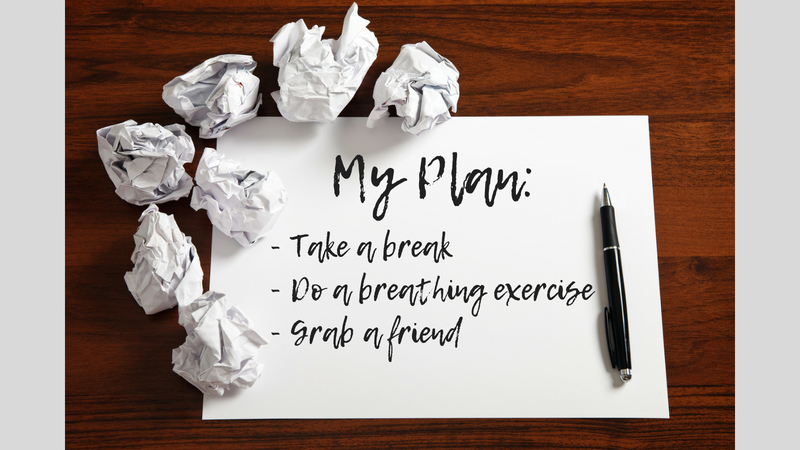
The point of the Cope Ahead Plan is to remove us from the position of victim and put us into a place of strength. We empower ourselves to take safe action.

Figuring out how we can safely extend forgiveness and grace while maintaining boundaries can be a challenge in every relationship.

Sharing our diagnosis is never easy. Alicia Rust shares her experiences with her bipolar diagnosis and sharing the elephant in the room.

When our helpfulness crosses the line into people-pleasing, we create friction in our lives. Remembering that every “yes” is connected to a “no” can help.
Everyone hits a crisis point, a point at which they look around at their lives and wonder how they got to that point. Life is chaos, and chaos destabilizes.

“Shoulds” are boundary-crossers. The real problem is when we adopt these external “shoulds” for ourselves. Casting them off can change our lives.

Controlling situations takes away a level of worry and anxiety I’ve often experienced. Then I learned something: Control issues aren’t about control.

One piece of standard advice from mental health professionals to those on the road to recovery is to start giving. Sure, I’ve had a few moments when I’ve been glad I volunteered, but I’ve also felt resentful of the imposition on my time. Resentment and a giving heart do not go hand-in-hand. This time was different.

What we see as sufferers is not always what you see as our support network. You have an opportunity to help us significantly in our recovery journey.

Sympathy, empathy, compassion. Simple ideas with complex meanings, teasing out the differences between them can be a challenge.

Saying no or denying a request often causes anxiety and feels scary. Yet, being clear on what we can and can’t do is key to strong relationships.


When we worry about being a burden to our support network, we miss out on an opportunity for healing. Here’s why you aren’t a burden.

It can be easy to look at depression, anxiety, and mood disorders as decisions. What happens when a medical issue determines our moods?